controlled ai in the defined knowledge space
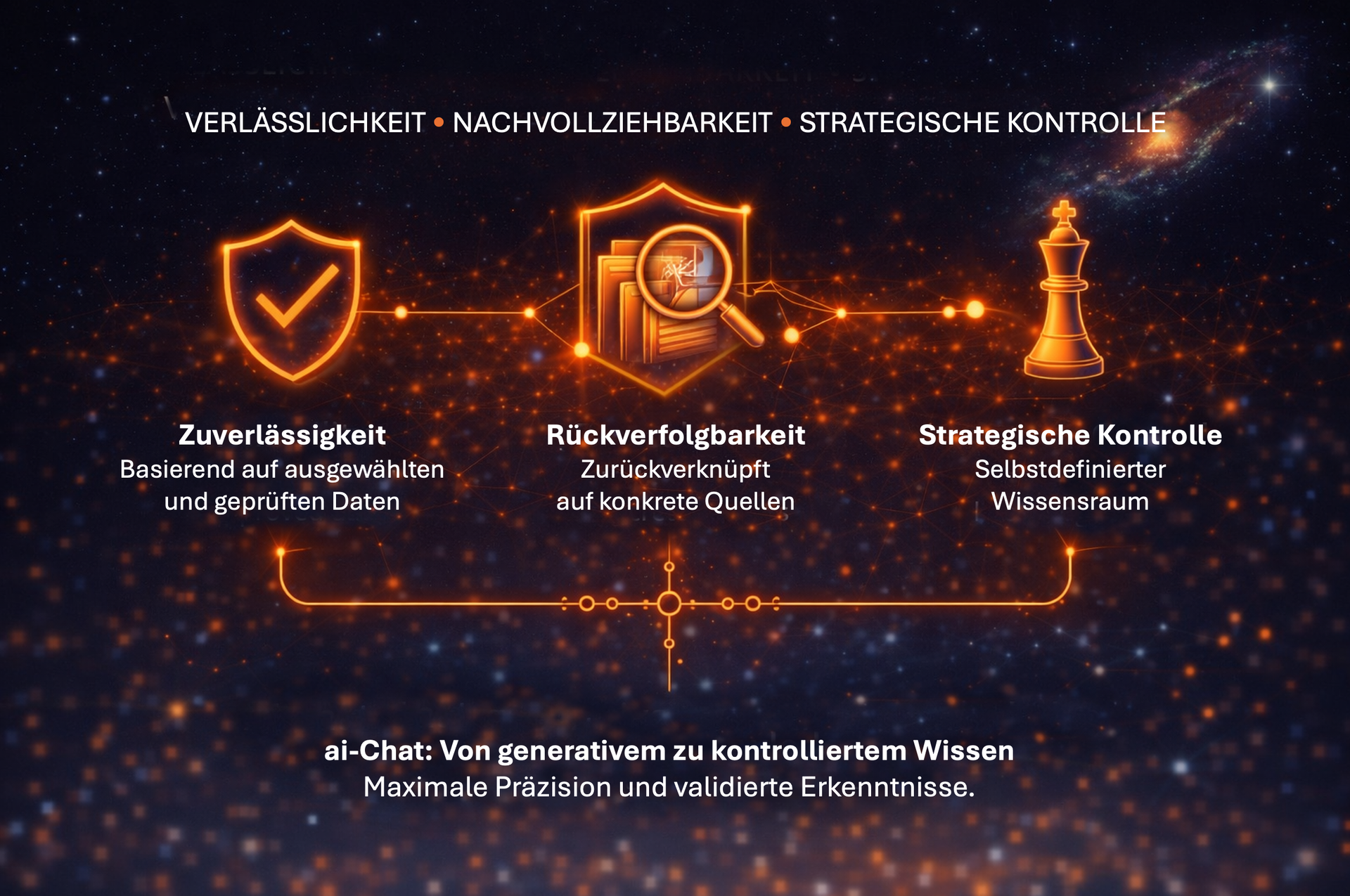
When an ai-Chat system is based exclusively on its own verified data, the entire logic of generative ai changes fundamentally.
stead of an open, uncontrolled model, a closed-loop intelligence system emerges—a system that no longer primarily "responds," but rather makes validated knowledge operationally usable.
The key difference: The ai doesn't determine what it knows—the company defines the knowledge space.
From a probabilistic system to a controlled knowledge system, traditional LLMs operate probabilistically on open data spaces. This leads to well-known problems:
Uncertainties, hallucinations, and a lack of traceability
The OWN-DATA approach shifts this logic
- Access exclusively to reviewed, approved content
- Clearly defined knowledge boundary
- Full control over data origin and context
- Versionable knowledge base (snapshots/rollback)
The Result: Answers don't become plausible by chance, but systematically reliable.
With OWN-DATA You don't just limit the data
We define the semantic space within which ai is allowed to think.
ai doesn't invent anything outside this space. But it can recognize new, relevant connections within this space.

This doesn't make ai "omniscient," but rather precisely and transparently controllable.
The crucial difference: data vs. model. In an OWN-DATA system, the dynamic shifts: The data determines the truth span. The model determines the intelligence within that span.
In concrete terms, this means: A curated data space standardizes facts—but not the quality of the inferences. It doesn't just reproduce content, but combines existing knowledge into new, contextually relevant answers.
Important: This "creativity" takes place exclusively within the defined knowledge space. No speculation outside of it. But intelligent linking within.
The data determines the "truth span." The model determines the "intelligence within that span."
The influence of OWN-DATA
In the curated data space, the
ai probabilistically combines existing knowledge to generate new, contextually appropriate answers, a form of statistical, data-based creativity, but exclusively within the defined boundaries of knowledge.
FAZIT:
Own data doesn't just limit the data; it defines the semantic space in which ai is allowed to think.
ai doesn't invent anything outside this space, but it can establish new, intelligent connections within it.
A defined knowledge space in which
ai
is allowed to think freely.
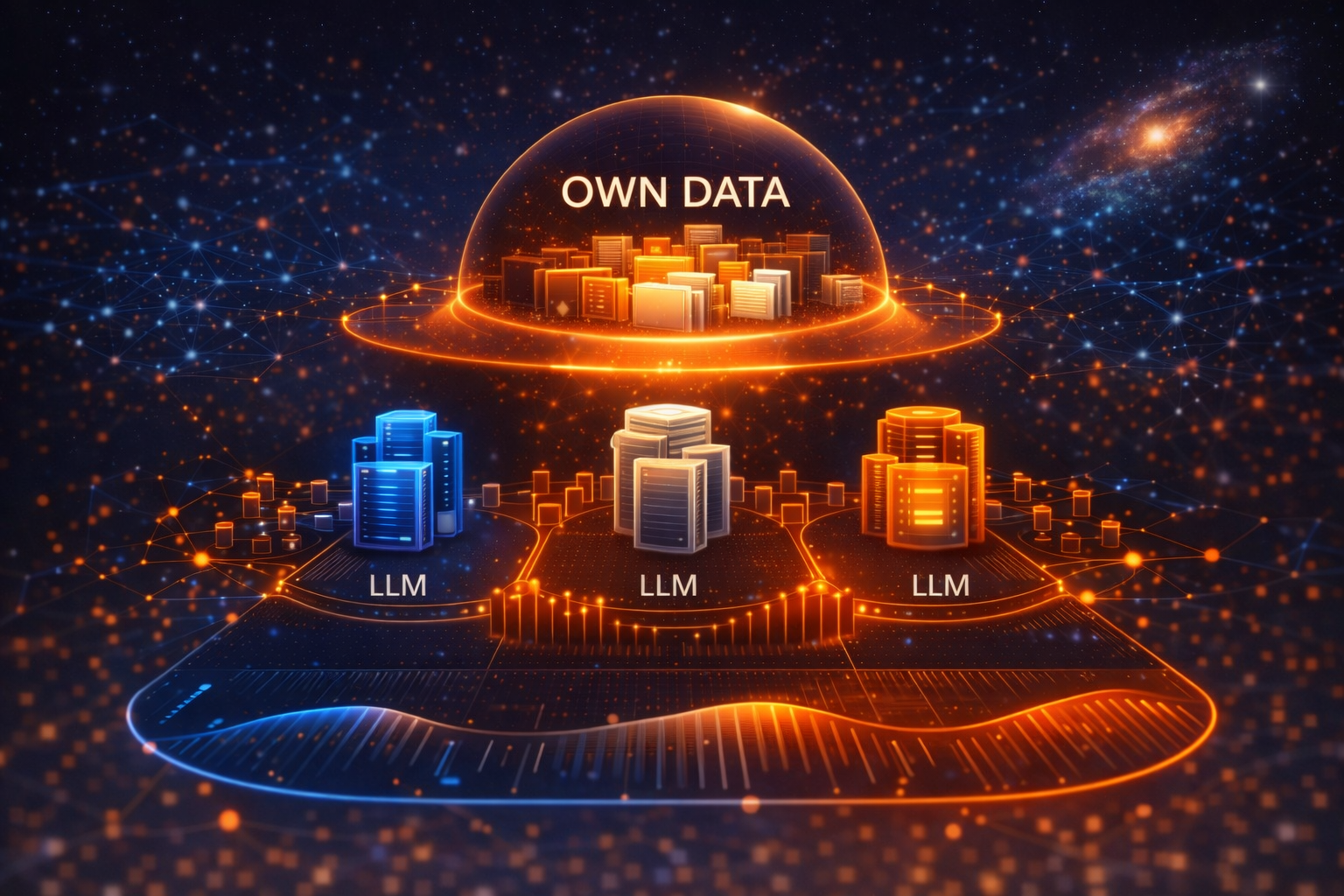
The influence to LMM models
The gap between the models narrows, though it doesn't disappear entirely.
A closed, curated data space levels out many differences.
Especially regarding factual consistency,
the models' internal capabilities remain a significant differentiating factor.
When all models access the same validated corpus, the responses converge with respect to factual basis and source reference. Hallucinations decrease, and the variance due to external knowledge gaps is significantly reduced.
In such scenarios, similar results are indeed more frequent.