References
Customers for whom ai-one™ has already provided services, as well as customers and industries that are currently using ai-one™ solutions.
Numerous renowned companies and organizations rely on our solutions and expertise. While some of these clients and projects can be publicly named, many others are subject to strict confidentiality and non-disclosure agreements (NDAs).
Especially in the areas of strategic digitalization, ai-supported knowledge systems, and sensitive data processing, discretion is a central aspect of our collaboration. Therefore, we deliberately publish only selected information about various projects or describe the applications in an abstract form.
Nevertheless, the following references provide insight into the breadth, complexity, and practical benefits of our solutions in real-world business and organizational environments.
NASA
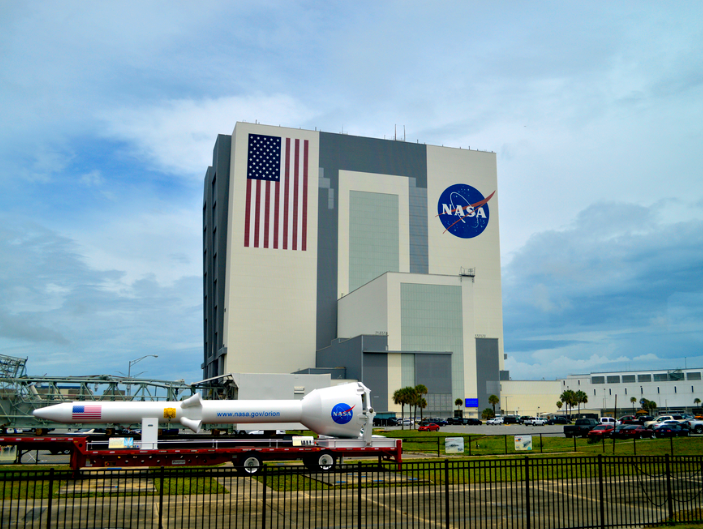
NASA Marshall Space Flight Center used specialized software solutions from ai-one™ Inc. on various projects. Along with numerous other development and integration tasks, our technologies were also used in the context of the "Mission to Mars" initiative.

BOEING
Within the framework of international technology and analysis projects, ai-one™ semantic matching methods were used for the content analysis, structuring, and comparison of large volumes of technical and professional documentation.
The focus was particularly on the intelligent matching of statements, meanings, and semantic relationships within globally generated reports and reference datasets. Complex methods for automated content analysis and the comparison of millions of documents were employed to efficiently identify relevant matches, discrepancies, and semantic relationships.

Insurance; Publishers; Forensic Applications
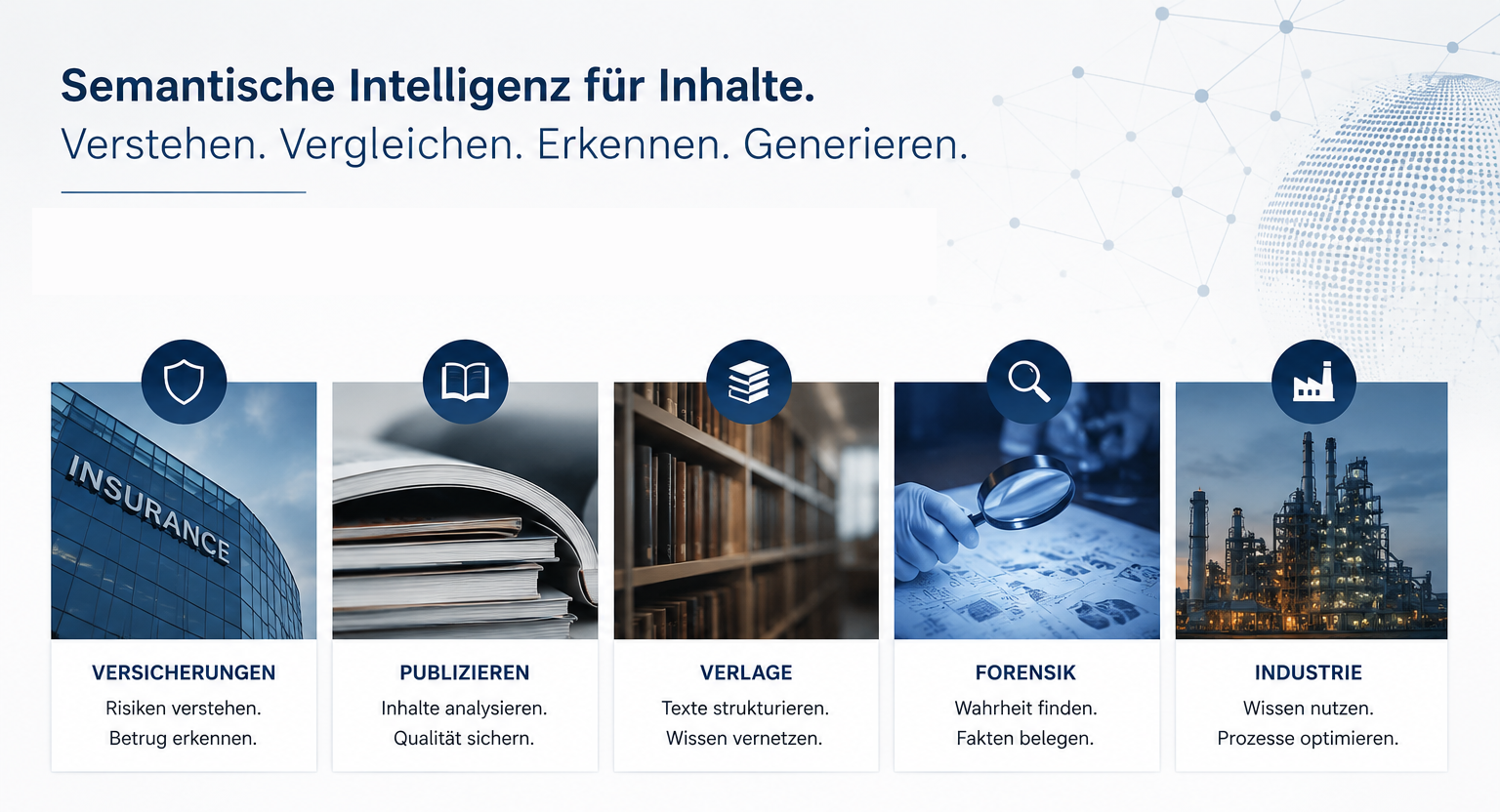
Insurance companies, publishers, and private and public organizations in the field of forensic and analytical evaluations have used and continue to use ai-one™'s semantic ai technologies for analyzing, evaluating, and generating complex content.
The focus has been, and continues to be, on the content interpretation and semantic comparison of large volumes of text—including the identification of patterns, deviations, and contradictions, as well as the assessment of the authenticity and plausibility of information. The systems have been and are being used to automatically compare content with reference sources, reveal connections, and filter relevant statements from extensive document repositories.
MUSEUMS
Museums today face the challenge of efficiently researching, verifying, and preparing large amounts of historical information for diverse audiences. ai can create enormous added value precisely in these areas.
The ai-Museums Expert
Making knowledge come alive
Every museum possesses unique knowledge that extends far beyond the content of its exhibits. With an ai expert, your visitors receive expert, understandable, and personalized answers to their questions at any time—directly in the museum, on the website, or via the digital history map.
The virtual museum expert is based exclusively on content released by your museum. It conveys knowledge reliably, in an age-appropriate manner, and in multiple languages—from spontaneous, brief dialogues to in-depth, expert explanations.
This transforms an exhibition into an interactive experience that invites visitors to explore, ask questions, and learn—around the clock and without waiting times.
Make your museum's knowledge accessible anytime, anywhere, with your personal ai museum expert.
ai-Recherche
Precise, fast, cost-effective
A central aspect of museum work is research and knowledge analysis. Historical statements must be examined, sources compared, facts verified, and content from archives, books, newspapers, and images linked together. This work is time-consuming and requires meticulous attention to detail.
ai analyzes large amounts of information in a very short time, compares sources semantically, identifies connections and contradictions, and assists in testing hypotheses.
ai's ability to reveal relationships between people, places, events, and time periods—relationships that often remain hidden during traditional research—is particularly valuable. This leads to new insights and deeper understanding of historical contexts.
ai does not replace historians or curators, but rather supports them as an intelligent research assistant. It significantly reduces research effort while simultaneously enabling more comprehensive and in-depth analyses.
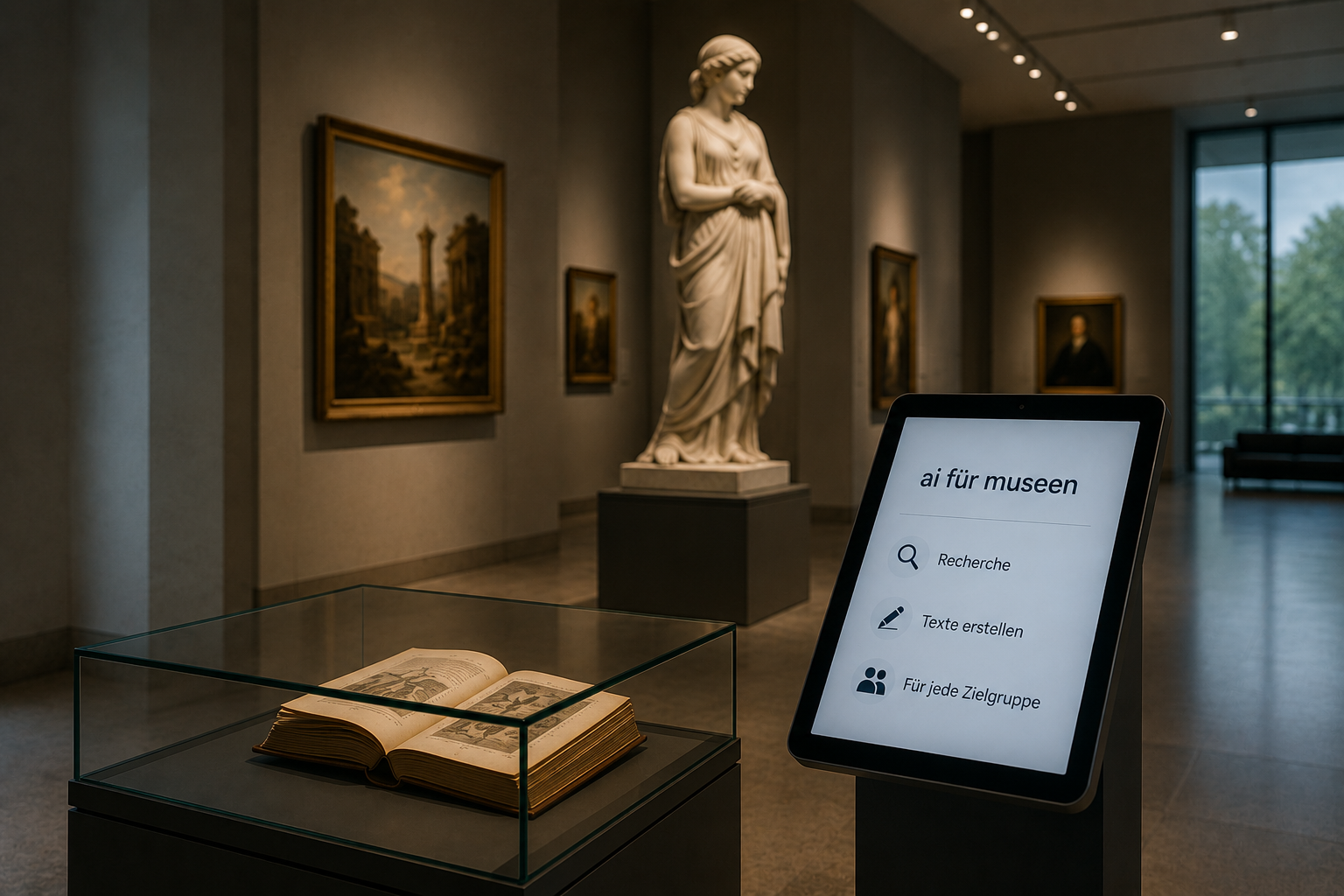
The ai chat can be fully customized to the museum's needs. The museum retains complete control over content, language style, tone, and level of detail at all times.
Depending on its application, the ai chat can behave differently: On the website, it answers general questions; in the exhibition, it explains exhibits and historical contexts; and in the app, it accompanies visitors as a personal museum guide or digital historian. The possibilities are virtually limitless.
Curated Texts
Language, Target Groups
Another important application is the creation and preparation of museum texts. Exhibition texts, object descriptions, brochures, websites, and content for digital applications are generated from existing sources. The ai supports the rapid and consistent creation of high-quality texts without altering the subject matter.
The ability to tailor content for different target groups is particularly valuable. From the same knowledge base, easily understandable texts for children, engaging explanations for school classes, generally accessible information for visitors, and in-depth specialist texts for researchers and experts can be created. Translations into various languages can also be produced efficiently.
The ai supports curators as an intelligent editorial assistant.
The effort required for text creation is significantly reduced, while the quality, consistency, and comprehensibility of the content are sustainably improved.