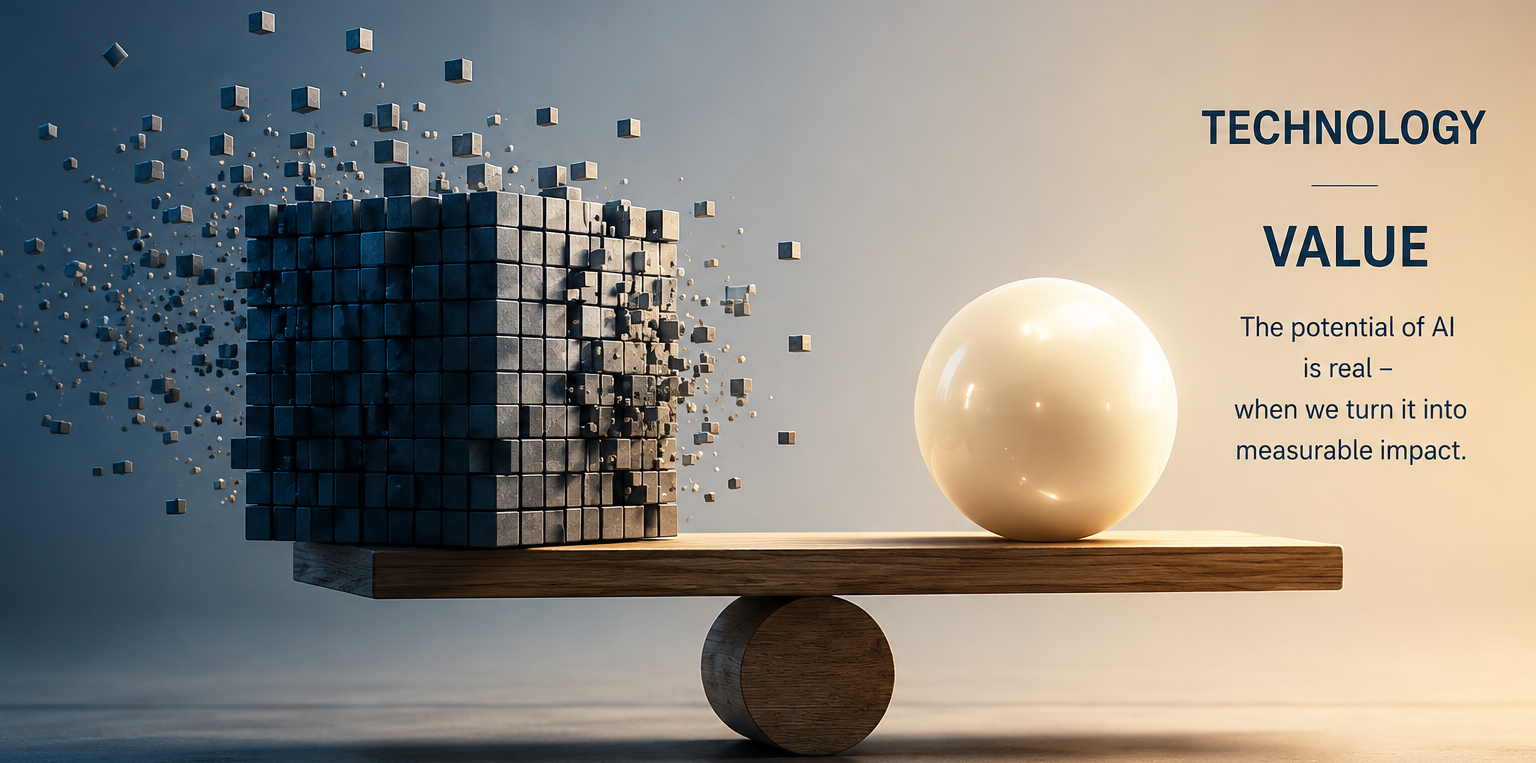
It's no longer about artificial intelligence – it's about controlling it.
After the first few years of practical experience with ChatGPT, Claude, Gemini, Mistral, Llama, and numerous other large language models, a clearer picture is emerging: The real revolution in artificial intelligence isn't happening where most people are looking.
The public debate still revolves around the performance of the models. Which model is more intelligent? Which writes better texts? Which programs better? While these questions are interesting, they don't go far enough. The real change is happening elsewhere.
The end of coding as a unique selling point
For decades, software development was a specialized skill. Either someone could translate a problem into software, or they couldn't. Programmers were the translators between business requirements and machine logic.
This starting point is currently disappearing at a rapid pace.
AI agents are already capable of largely automating the creation of software modules, databases, interfaces, websites, and even complete applications. Quality is constantly improving. What currently requires a developer to check and correct will be largely created autonomously tomorrow. Therefore, it can be assumed that manual coding will decline significantly in importance in the long term. It's not the software itself that will disappear – but rather the way it is created.
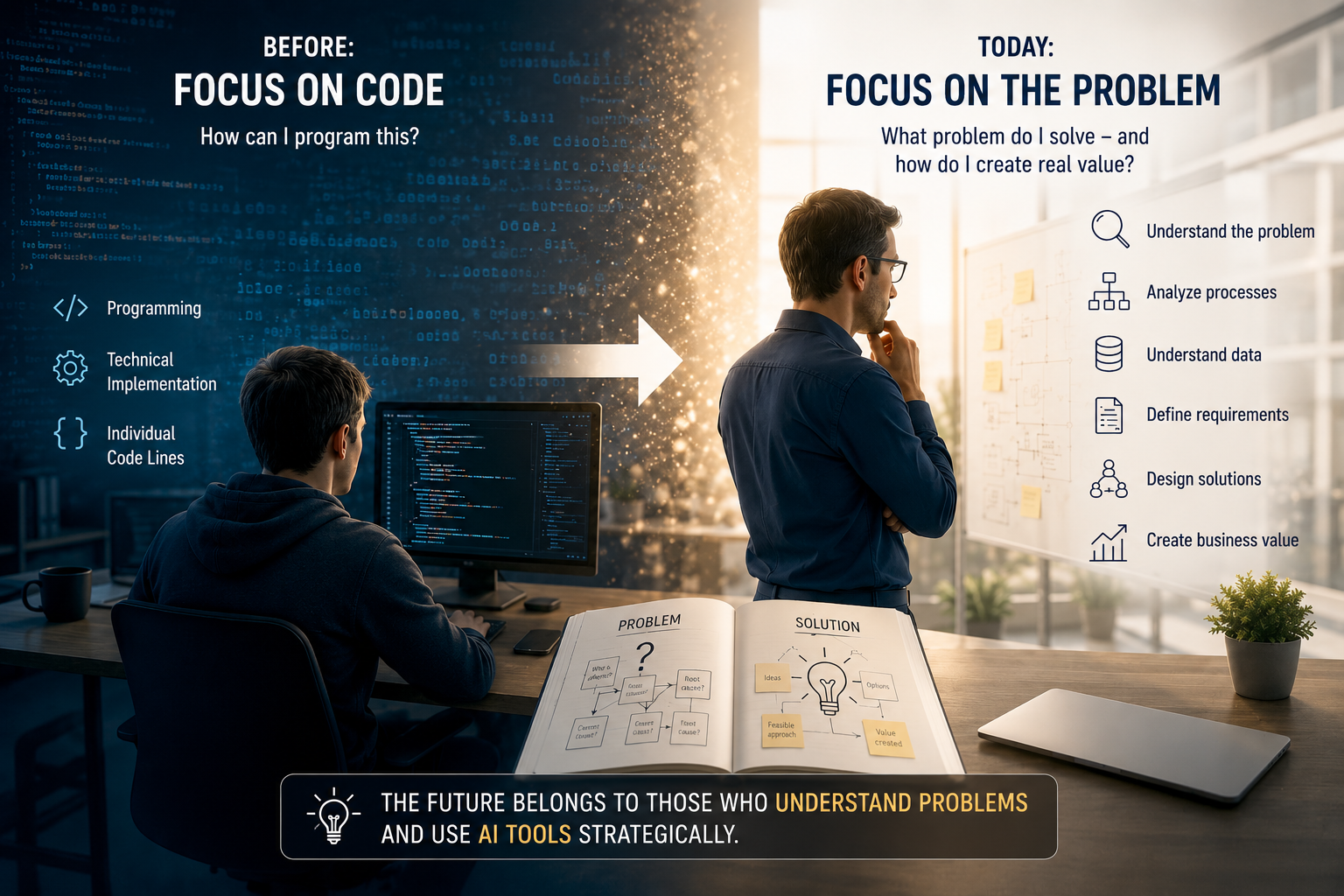
The AI architect: “What is the actual problem and what combination of data, processes, people, AI and software solves it best?”
The focus shifts from the code to the problem.
The crucial question in the future will no longer be:
"Who can develop software?" - But rather:
"Who best understands the problem, the processes and the business case and can optimally utilize the available AI tools?"
The ability to analyze problems, formulate requirements, understand data structures, and model business processes is becoming more important than the ability to write individual lines of code.
This shift is fundamental. It's like a reset for the entire IT industry.
Historically, this is reminiscent of the revolution in the graphic arts industry in the 1980s and 1990s. At that time, multi-million-dollar phototypesetting systems, specialized scanners, and proprietary image processing equipment were replaced by affordable and intuitive software solutions such as Microsoft Office, Adobe Photoshop, and desktop publishing systems.
Graphic design didn't disappear – it was democratized.
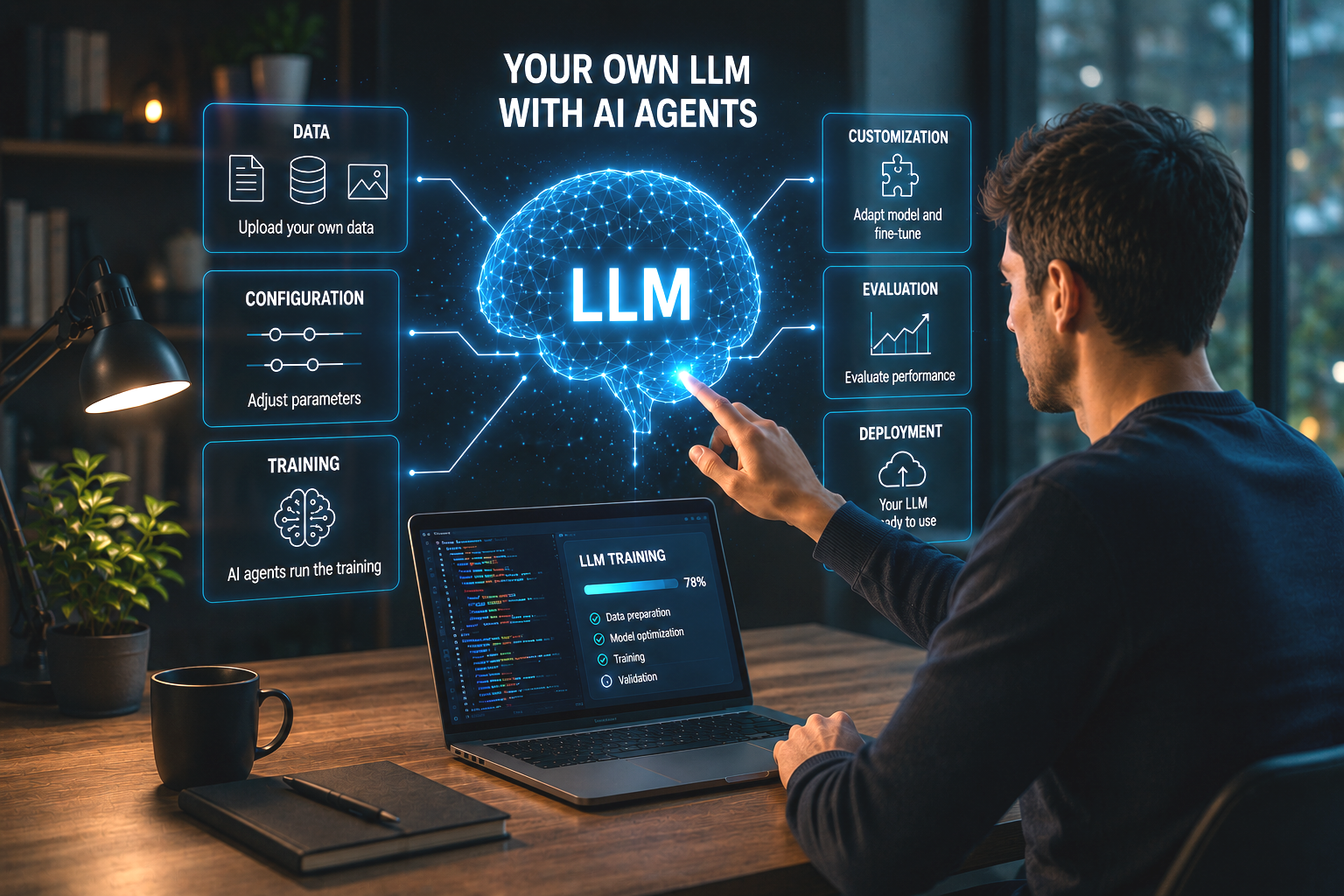
If everyone can operate an LLM
In parallel, the infrastructure is changing. Just a few years ago, powerful AI models were exclusively the domain of large technology companies. Today, businesses, universities, government agencies, and even individuals can operate, adapt, and train their own models locally.
As a result, the existing power structure is beginning to crumble.
Long-term trends indicate that AI models will increasingly become commodities—similar to databases, operating systems, or web servers. The crucial factor will no longer be who owns an AI model, but rather who controls its use.
In just a few years, artificial intelligence will likely no longer be perceived as a separate topic. It will be as commonplace as electricity, the internet, or databases. It will no longer be discussed because it will be ubiquitous.
From technology competition to control competition
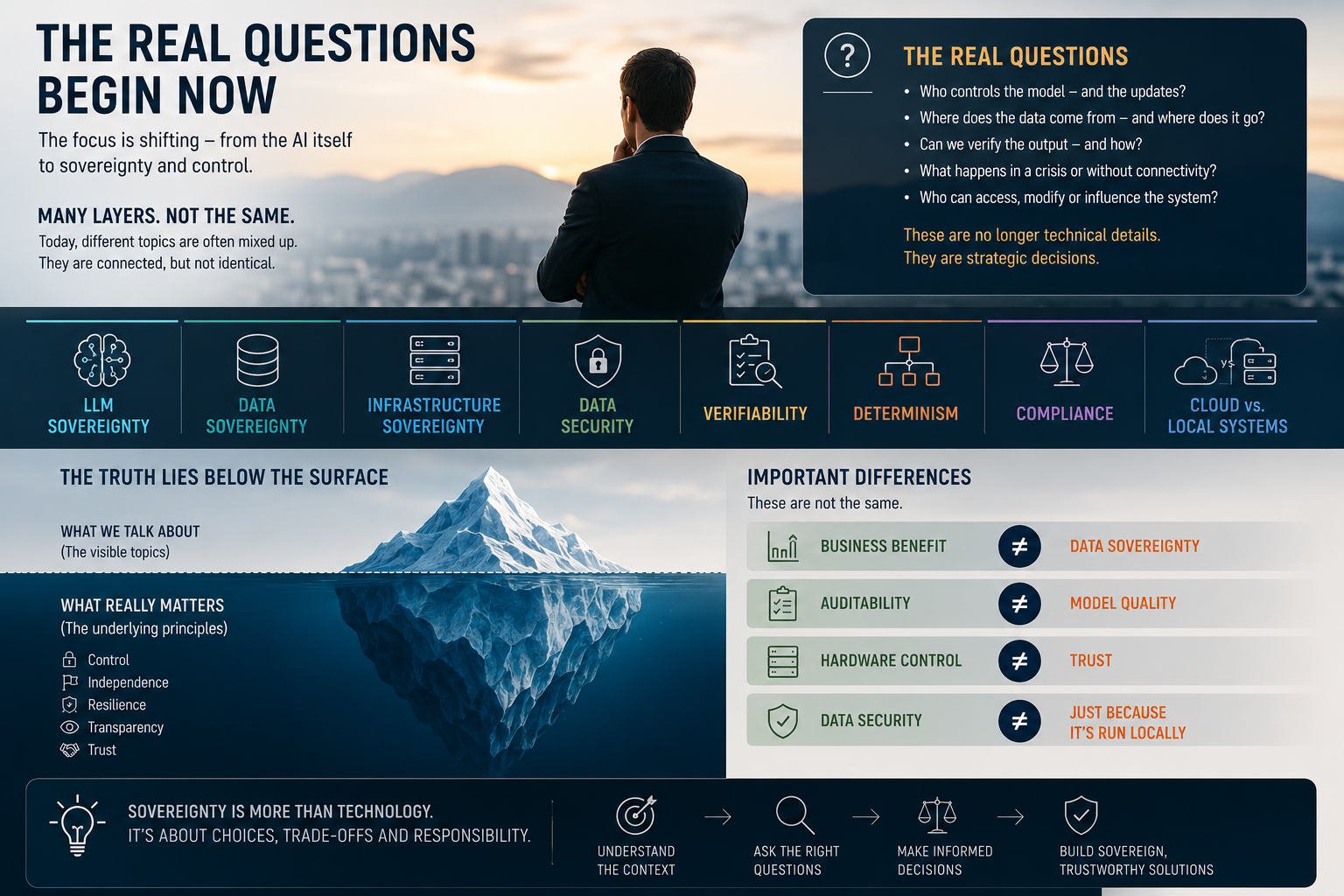
The real questions are only just beginning.
This development shifts the discussion away from AI itself and towards questions of sovereignty and control.
Today, various levels are often conflated in this discussion.
- LLM sovereignty
- Data sovereignty
- Infrastructure sovereignty
- Data security
- Traceability
- Determinism
- Compliance
- Cloud versus on-premises systems
These topics are related, but they are not identical.
- Business value is not the same as data sovereignty.
- Auditability is not the same as model quality.
- Hardware control is not the same as trust.
- And data security is not automatically guaranteed just because a model is run locally.
Der Markt sucht heute vor allem Lösungen, die:
- reale Geschäftsprozesse verbessern,
- organisatorisch beherrschbar sind,
- regulatorische Anforderungen erfüllen,
- nachvollziehbar bleiben,
- und eine langfristige Kontrolle über Daten und Wissen ermöglichen
This raises two key questions:
Who controls the model? - Who controls the data?
This is precisely where the future competitiveness of companies, organizations, and even states is decided.
Conclusion
The AI revolution is no longer primarily a question of technology. The models are becoming more powerful, more affordable, and accessible to a growing number of stakeholders. The real challenge going forward lies in being able to control knowledge, processes, data, and infrastructure.
Those who combine business acumen, workflow integration, verification, data sovereignty, and organizational manageability will create the next generation of enterprise AI platforms.
The crucial question is therefore no longer:
“How intelligent is AI?” Instead:
"Who controls them – and who has data sovereignty?"