ai in Healthcare
A guide to the legal aspects
The Public Debate
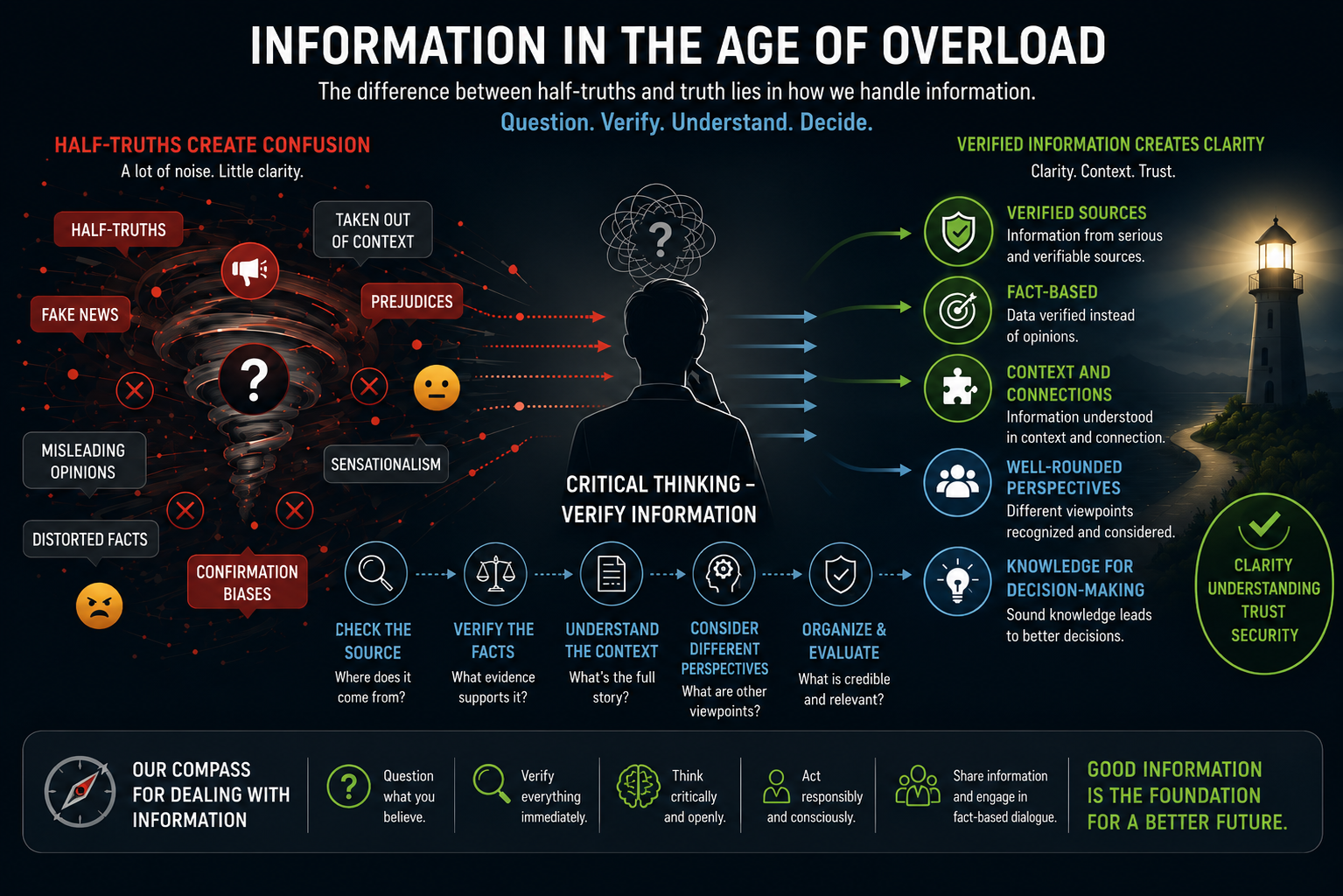
The debate is no longer solely driven by technical or legal facts. Politicians, government agencies, data protection authorities, professional associations, insurance companies, software manufacturers, cloud providers, and consulting firms each pursue their own interests.
The result is often uncertainty: projects are delayed, opportunities go unused, or, out of caution, solutions are procured that do not actually meet the requirements.
This can be countered with a transparent data protection concept that meets the highest security standards – this must be the starting point for any decision regarding ai implementation.
We would be happy to support you in defining your ai
goals and clarifying the legal aspects.
Guidance Instead of Uncertainty:
Management Guide for Boards of Directors, Executive Management, and Decision-Makers
ai in healthcare is less of a technical challenge today than a process and organizational one. The greatest difficulty lies not in finding an AI solution, but in correctly interpreting the multitude of legal, organizational, technical, and political statements.
Hardly any topic is discussed as controversially as ai in healthcare – and hardly any area is characterized by such misunderstandings and contradictory statements. Data protection, information security, professional confidentiality, cloud computing, local ai, medical devices, liability, and ethics are often mentioned in the same breath, even though they are different topics with different questions. This makes it more difficult for boards of directors, executive management, and practice owners to make well-founded decisions.
The crucial question: How can ai be implemented responsibly, legally, economically, and for the benefit of residents, those receiving care, and patients?
The key lies in the overall concept.
Implementing ai doesn't begin with selecting a product. It begins with analyzing your own processes and developing a clear strategy.
Among other things, the following questions should be answered:
- What problem needs to be solved?
- Which processes need to be supported?
- What data will be processed?
- Where will this data be stored?
- Who will have access?
- What legal requirements apply?
- Is it an assistance system or a medical device?
- What risks actually exist?
- What risks are merely suspected?
- What organizational and technical safeguards are necessary?
Data Protection – Clearly Separated Issues
The umbrella term "data protection" encompasses several distinct areas:
- Protection of personal rights
- Data protection
- Information security
- Professional secrecy and confidentiality obligations
- Technical system architecture
- Data access rights
- Risk analysis and action plan
Each of these areas has its own legal framework, different responsibilities, and varying technical and organizational requirements. Only by clearly separating these issues can a realistic picture of the actual requirements emerge.
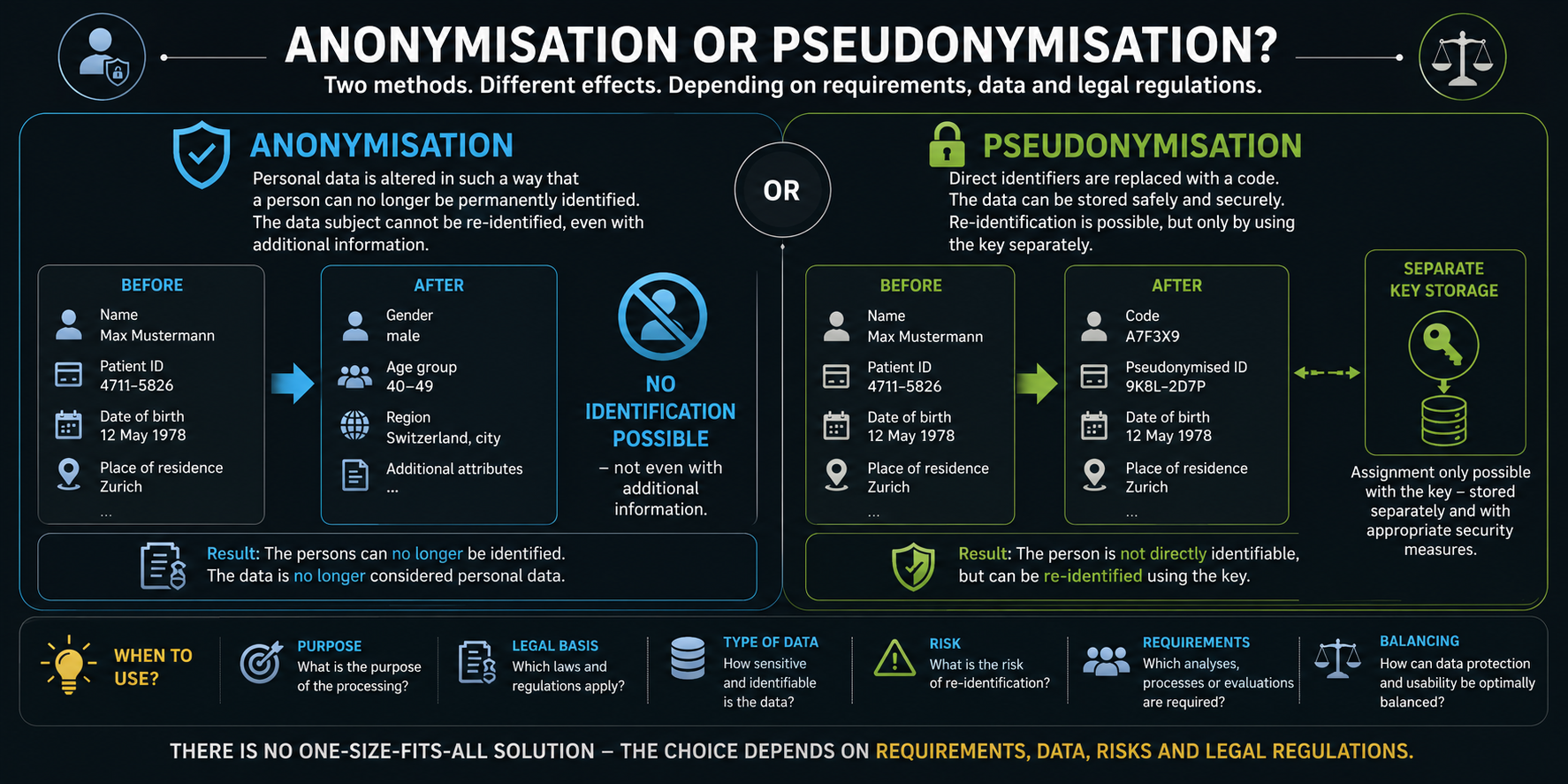
Anonymization or Pseudonymization?
Depending on the use case, the type of data, and the applicable legal requirements, different methods are employed.
Anonymization means that personal data is altered in such a way that it is permanently impossible to identify an individual. The data subject can no longer be identified, even with additional information.
Pseudonymization means that direct identifying characteristics (e.g., name or patient number) are replaced by a code. However, the identification can be re-established using a separately and securely stored key.
The method used depends on the specific requirements, the intended purpose, the legal framework, and the technical and organizational security measures. In practice, both methods are used selectively, depending on the situation, to optimally combine data protection and usability.