Swiss Alps, Overlooking 14K-Foot Peaks
Curated CORA-ai for Museums
Curated ai instead of uncontrolled "Internet Data"
CORA-ai is purposefully used not only to generate content for museums, but also to curate and present it in a meaningful way.
Curated content
is not simply generated automatically. It is carefully selected, verified, contextualized, and tailored to the needs of a specific audience.
CORA-ai is a specialized analysis and conversational AI solution for creating, refining, expanding, and editing text. It processes both internal and external knowledge sources using precisely defined personas and prompts, which can be fully managed and customized by the customer.
The result is structured, purpose-driven, and context-aware content that is created under full editorial and curatorial control. The solution supports museums in their content creation and knowledge management, increases the efficiency of editorial workflows, and enables sustainable cost savings.
Controlled ai assistance stands out through the quality of its results and often reveals new insights and previously hidden connections.
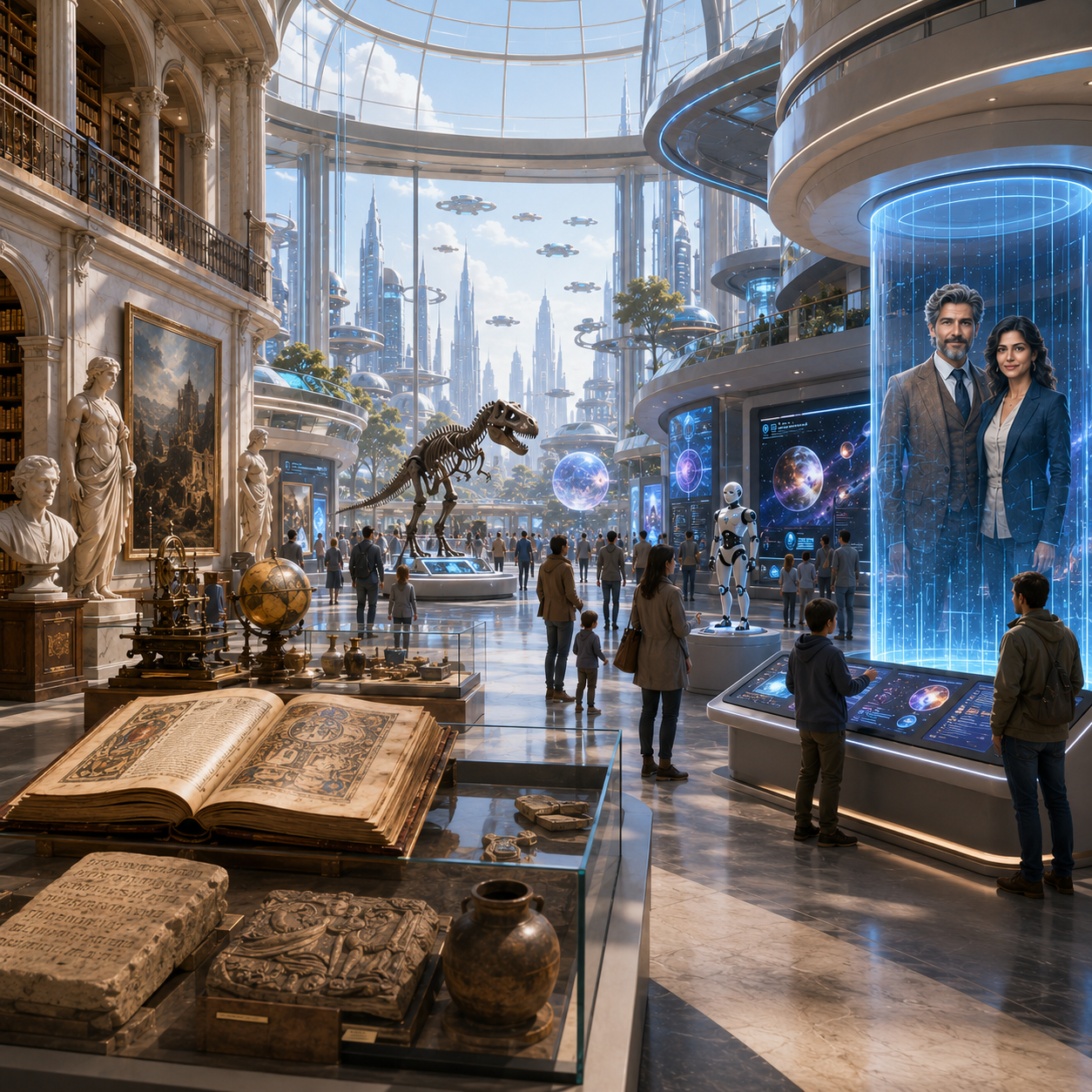
Museums have long recognized the importance of high-quality visual storytelling and have implemented it with great success.
Yet a significant part of their knowledge remains hidden from visitors. Only the combination of immersive visual experiences and ai-powered dialogue unlocks the full depth of a museum’s knowledge, making it understandable, interactive, and accessible at any time.
The future of Museums
The future is leading toward a society in which local history, cultural identity, and shared knowledge are increasingly communicated digitally and developed collaboratively.
Cultural heritage is no longer passively consumed but actively explored, shared, and reinterpreted. While the rapid advancement of artificial intelligence provides unprecedented access to historical information, it also raises expectations for museums to serve as trusted, authoritative, and verifiable sources of knowledge.
Museums must evolve into hybrid knowledge platforms that seamlessly connect physical spaces with digital experiences and networked learning environments. As the first point of contact increasingly becomes digital, museums are becoming central places for engagement, reflective knowledge sharing, and the preservation of cultural identity in a connected world.
Every visitor has different prior knowledge, interests, and expectations. Affordable, personalized knowledge delivery is only possible with CORA-ai.
Through intelligent dialogue,
CORA-ai
adapts language, content, and depth of information to the individual needs and interests of each visitor.
The learning Museum
ai-support with internal work-flows
“Learning museums” continuously expand their knowledge more efficiently with the help of ai. They connect people, objects, stories, sources, and visitor feedback, uncovering new relationships and generating deeper insights.
“Learning museums” do more than preserve the past. They generate new knowledge, uncover hidden connections, and continuously expand the boundaries of understanding.
Applications
Visualizations, ai-Chat, Audio/Video, 3D ...
- Object and artifact descriptions
- Editorial content for publications
- Historical analysis and interpretation of events
- Summarization of research papers, documents, and historical events
- Content adaptation for different audiences and reading levels, including children, teenagers, adults, and specialists
- Story generation based on historical records and fragmented source material
- Podcast script generation
…and countless other applications
The teaching Museum
ai-support with external work-flows
“Teaching museums” communicate knowledge in engaging, audience-centered ways. They transform collections, stories, and research into interactive, AI-powered experiences.
“Teaching museums” open a dialogue between the past, the present, and the future. They transform information into insight, understanding, and lifelong learning.
Leaflet: Geschichtskarte und AI
The talking Museum
ai-Experts Providing Trusted Knowledge
Museums invest enormous time, expertise, and passion in creating engaging exhibitions, remarkable collections, and interactive visitor experiences. Yet the true knowledge of a museum extends far beyond what can be presented on information panels, in videos and images, through multimedia installations, or inside display cases.
With the museum’s ai Experts, this wealth of knowledge becomes instantly accessible through natural conversation.
Visitors can ask questions, explore historical contexts, discover hidden connections, or dive deeper into topics of personal interest. The AI adapts every response to the visitor’s knowledge, language, age, and level of curiosity.
Answers, analyses, and personalized explanations can be saved or conveniently sent by email for later reading and further exploration.
Leaflet: KI-Expert:Innen Chat
Knowledge That Stays With You
Visitors can ask questions directly in more than 90 languages, in the museum, through a mobile app, or from home using their computer.
Teachers can prepare lessons, explore historical contexts, and discuss topics with their classes. Students can discover new perspectives, verify information, and develop their own questions through interactive dialogue.
Researchers, journalists, and anyone interested in history also benefit from AI Experts that explain complex topics clearly, reveal hidden connections, and provide reliable, curated knowledge.
The ai Experts
can also generate podcasts, narrated stories, educational summaries, and many other personalized formats, transforming knowledge into engaging and memorable experiences.
The CORA Museum-Cockpit
the CORA Cockpit is split into tree sections:
Left site = Recherche | Middle = Results | Right site: Chat/- Textgeneration
Recherche an knowledge discovery
Research serves two key purposes. First, it enables users to quickly locate specific texts, documents, and relevant content. Second, it helps determine whether sufficient knowledge and source material exist for a particular topic.
Selected passages can then be summarized instantly using the Quick Summary feature, providing a concise overview of the most relevant information.
The Quick Summary mode is particularly useful when creating new content based on existing articles, documents, or research material.
Existing information can be efficiently condensed and, when required, enriched with new insights. These additions can then be edited, refined, and expanded directly within the cockpit’s workspace, providing a seamless and efficient editorial workflow.
Resultats / visualisation
The center section of the cockpit displays the generated results. The layout is fully configurable and can be tailored to the customer’s specific application, workflow, and business requirements.
The cockpit is designed to be intuitive and easy to use. Results are automatically generated and presented in a structured format according to predefined prompts, personas, and process workflows.
Depending on customer requirements, the generated content can be exported in various formats, including TXT, Microsoft Word, and HTML.
Alternatively, the cockpit can be integrated directly with upstream and downstream systems, enabling seamless data exchange and automated processing without media breaks or manual intervention.
Chat-/ text generation
The right-hand side of the cockpit contains the ai chat workspace. Depending on the configured workflow, predefined prompts are available and can be used immediately or customized to meet specific requirements.
Users can also enter their own text or simply copy and paste existing content to expand, revise, or create new tasks and instructions.
If the user has the appropriate permissions, the chat interface can also be used for Internet research. In this mode, the system accesses OpenAI through its API, providing the same capabilities as a licensed ChatGPT solution for individuals or enterprises. At the same time, all organization-specific functions, personas, prompts, workflows, and governance features of CORA remain fully integrated and available.
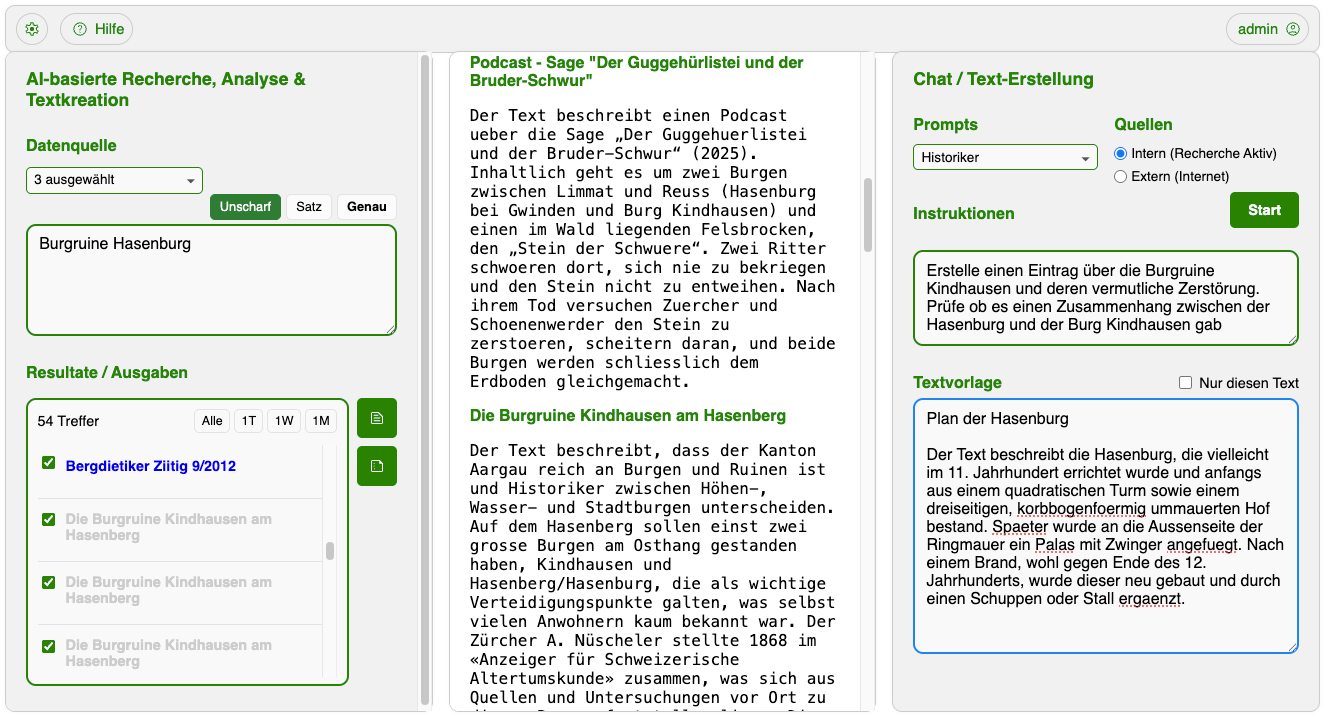
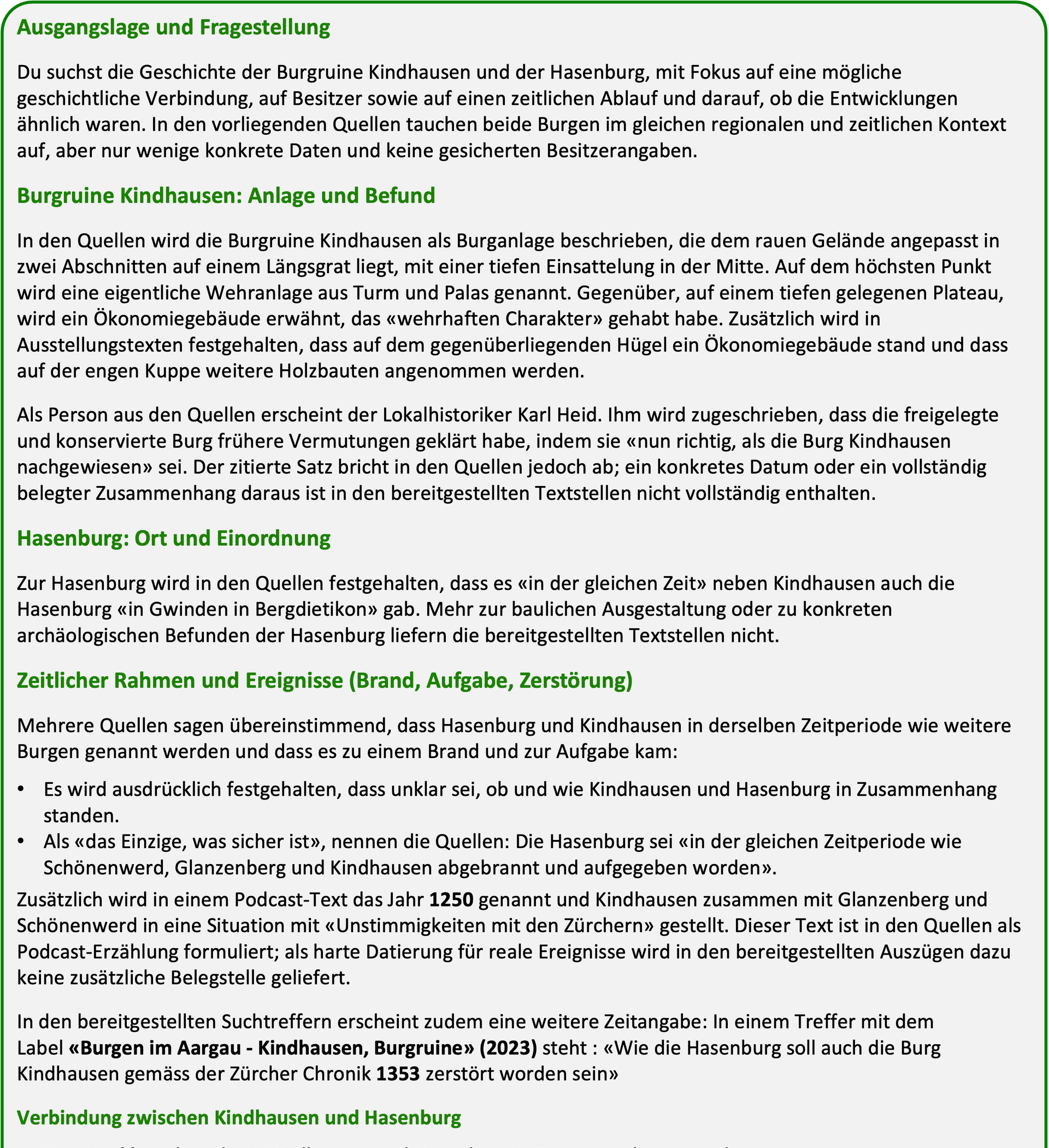
View During Content Creation in the Cockpit
In the left section of the cockpit, the system was first used to research all available information and source material about Kindhausen Castle Ruins. The retrieved content was then summarized to verify that a sufficient knowledge base was available.
Based on this curated information, the ai was instructed through a prompt to create a new article in the form of an engaging historical story for teenagers and adults.
This entire research and preparation process took less than two minutes.
Completed Article
CORA generates the article according to the predefined system and user prompts. Its content, structure, style, and formatting follow the museum’s editorial and curatorial standards.
Before publication, the curator reviews the article, makes any necessary refinements, and approves it for further use or publication.
Significant savings
For most of our customers, the primary objective is to optimize existing business processes. The goal is to increase efficiency while achieving sustainable reductions in operating costs. In many organizations, current workflows are too complex, too expensive, and consume valuable human resources.
Because these processes require qualified professionals, opportunities for reducing personnel costs are inherently limited. Once an organization has reached its minimum operational staffing level, further cost reductions become increasingly difficult.
This leaves two long-term strategic options: either reduce or discontinue services, or significantly increase the productivity of the existing workforce through new technologies and optimized workflows.
This is where ai creates entirely new opportunities. With the same number of employees, organizations can handle two to three times the workload while improving quality and reducing processing times. As a result, services become more competitive, more attractive to customers, and can often be offered at lower cost. Higher productivity not only reduces costs but also creates new revenue opportunities, enabling organizations to finance their digital transformation sustainably.
The greatest opportunity, however, lies beyond efficiency. ai makes entirely new products, services, and business models possible, opening new markets and attracting new customers. In other words, ai is not only about saving money, it is about enabling growth.
Our customers report productivity improvements of at least 50%, with some administrative processes achieving gains of up to 80%.
How Is This Possible? – A Practical Example
The knowledge base of the Bergdietikon Local History Museum currently contains approximately 2.5 million words, equivalent to around 8,500 pages of historical documentation. This repository continues to grow every day.For a small local museum, this already represents an extraordinary body of knowledge.
A human researcher would need approximately 400 hours simply to read this material. The real challenge, however, lies beyond reading: understanding the content, identifying relationships, comparing sources, and connecting people, places, events, and historical periods.
An ai system can import this entire knowledge base in just a few minutes. Once processed, all information becomes immediately available. For every question, the AI analyzes the meaning and intent of the query, connects it with the museum’s knowledge base, and identifies relevant information, cross-references, and patterns within seconds.
When ai operates within a controlled and curated knowledge environment, it goes far beyond simple information retrieval. It can reveal previously hidden relationships, identify meaningful patterns, and offer new perspectives. Rather than inventing facts, the system intelligently connects verified information and derives new, professionally plausible insights from the existing body of knowledge.
The result is significant added value: higher-quality answers, richer content, deeper insights, and entirely new services—all without requiring additional staff.