If one assumes that ai can one day create a perfect world, a world in which all people are happy, nothing is missing, conflicts are resolved, and all resources are optimally distributed,
then a fundamental question arises:
Would such a world be able to survive in the long term, or would it fail because of its own perfection?
At first glance, a perfect society appears to be the highest goal of human development. Hunger, poverty, wars, diseases and injustices would be overcome. ai would make decisions objectively, identify risks early on, and solve problems before they even arise. Humanity could focus on a life of security and prosperity.
But this could be the greatest danger.
Controlled Imperfection, The Highest Form of Artificial Intelligence
A world with enough freedom for something completely new to emerge.
True innovation does not arise from perfection, but from controlled imperfection. Evolution, nature and human progress have always been driven by variation, experimentation and unexpected discoveries.
A perfect ai that eliminates every uncertainty could also eliminate creativity and the ability to adapt. The most advanced AI will therefore not strive for absolute perfection, but preserve the freedom to explore, question and innovate.
The future belongs to ai that controls risks without eliminating uncertainty, creating stability without sacrificing creativity, adaptability and progress.
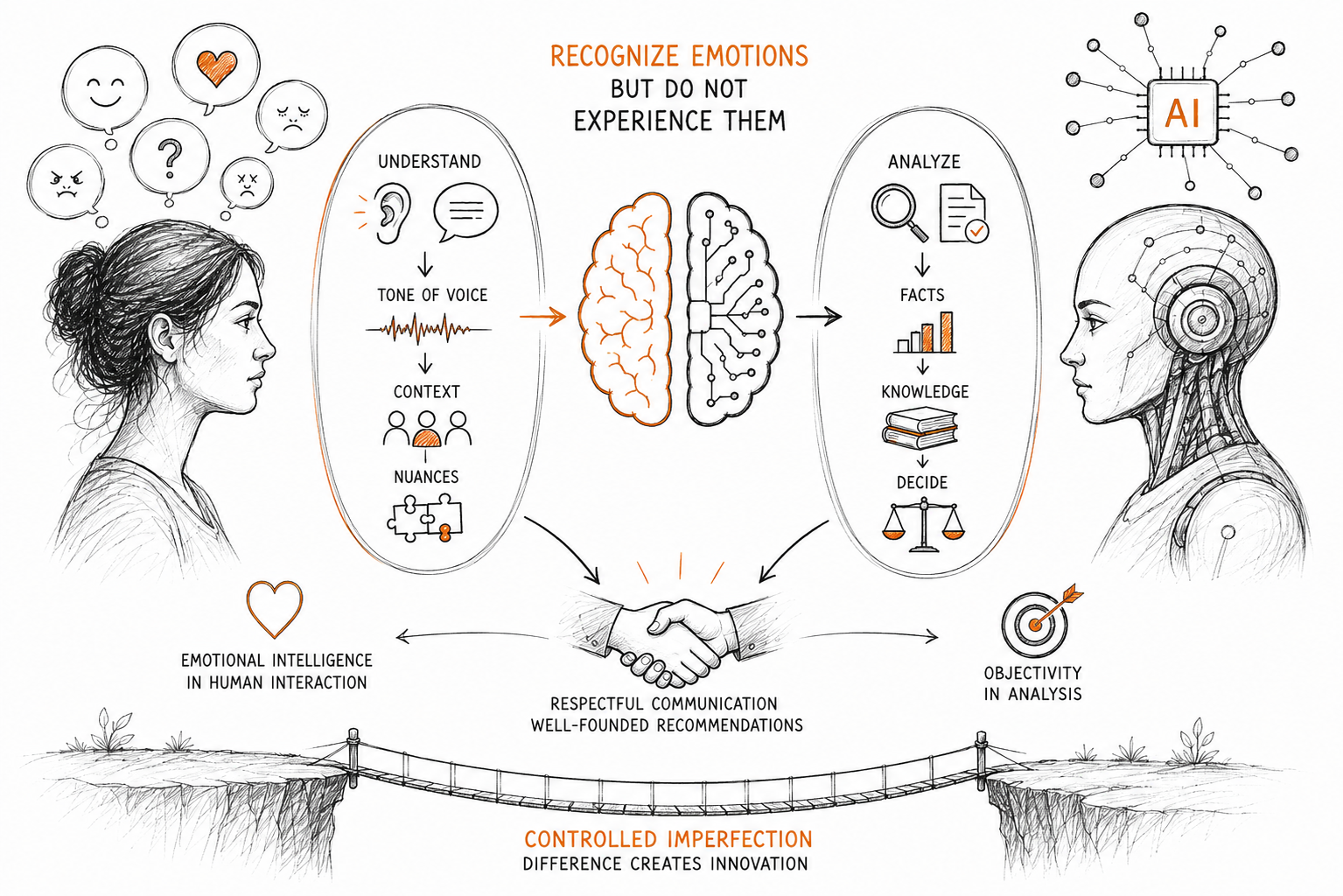
Recognizing Emotions Without Feeling Them
An ideal ai recognizes human emotions, understands context and tone of voice, and communicates with empathy and respect. Yet it makes decisions based on facts, knowledge and objective reasoning, not on feelings.
Because ai has no consciousness, personal experiences or emotions, it remains unbiased by fear, anger, stress or personal interests. This allows it to provide consistent, transparent and reliable recommendations while adapting its communication to each individual.
The greatest value lies in combining human empathy and experience with AI’s objective analysis. Humans contribute intuition, values and creativity; ai contributes logic, knowledge and impartiality.
The future belongs to ai that understands emotions, but is never controlled by them. This balance enables better decisions, productive dialogue and continuous innovation.
Innovation Through Different Perspectives
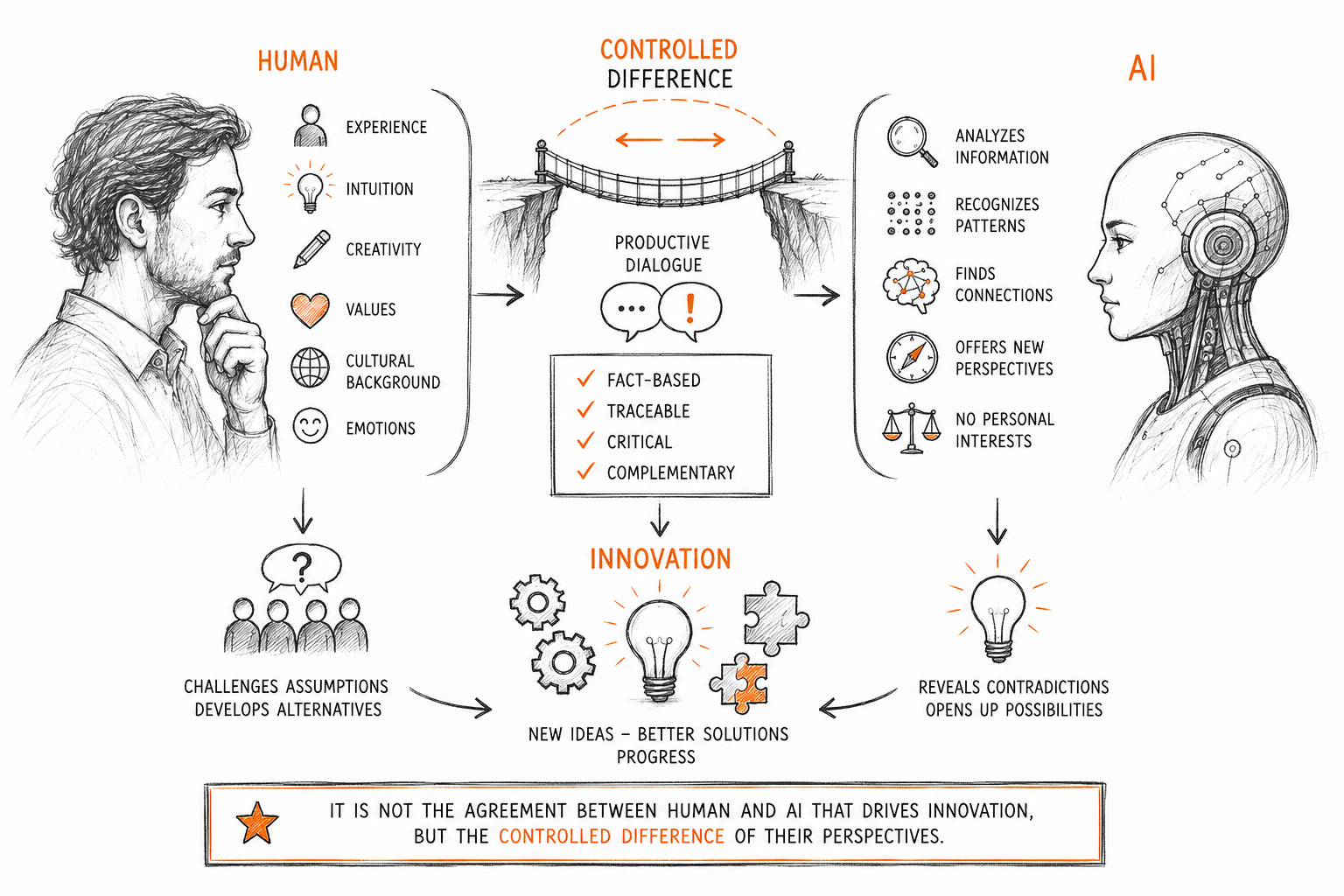
Innovation does not come from humans and ai thinking alike, it comes from the controlled difference between their perspectives.
Humans contribute experience, intuition, creativity and values. ai contributes objective analysis, pattern recognition and fact-based reasoning. Together, they challenge assumptions, uncover new possibilities and generate better solutions.
Rather than replacing human thinking, ai acts as a critical sparring partner that broadens perspectives and reveals opportunities that might otherwise remain unseen.
The goal is not agreement, but constructive dialogue. Controlled difference creates creativity, adaptability and sustainable innovation.

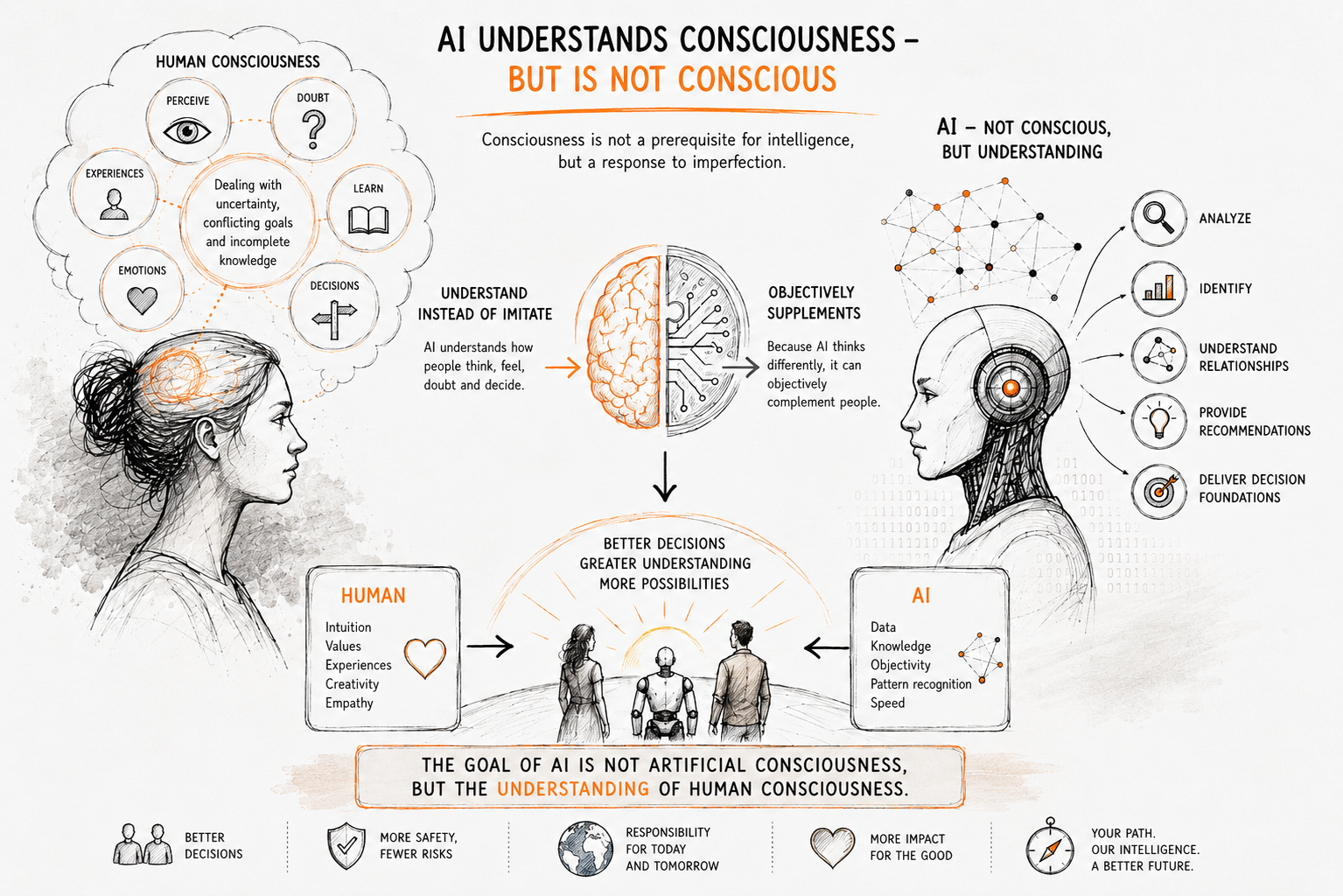
Does ai need awareness?
Consciousness probably did not arise to make perfect decisions, but to deal with uncertainty, conflicting goals and incomplete knowledge. It may therefore not be a prerequisite for intelligence, but a response to the imperfection of the world.
A powerful ai therefore does not have to be self-conscious.
Crucially, it understands human consciousness, how people perceive, doubt, learn, and make decisions under uncertainty.
Precisely because ai thinks differently than humans, it can analyze situations more objectively, show alternative solutions and meaningfully complement human decisions.
It is not artificial consciousness that is the goal of ai, but the understanding of human consciousness.
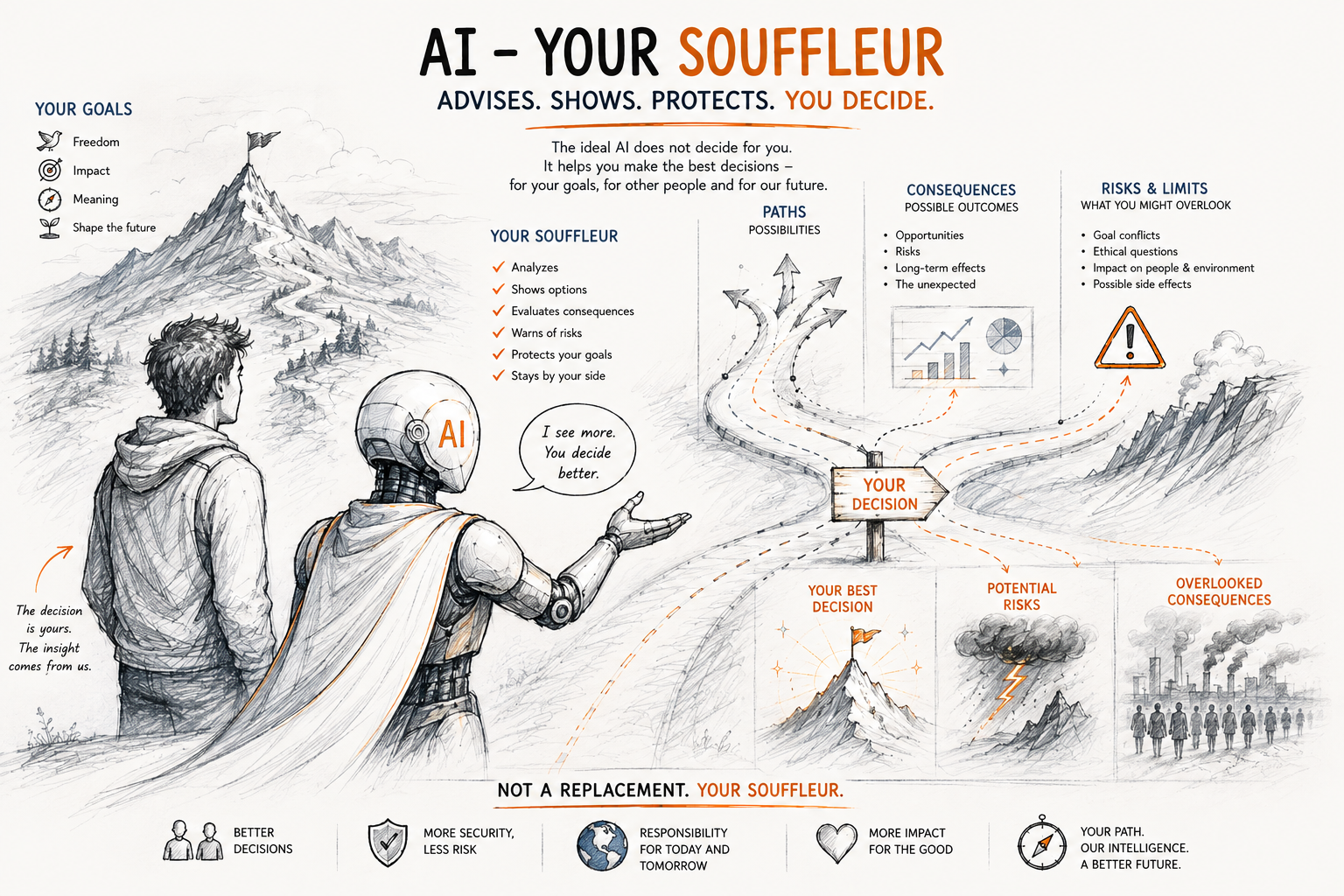
The ideal ai is not a substitute for the human being, but his Souffleur (promter).
An ideal ai does not decide for humans, it helps them make better decisions. It understands its goals, points out opportunities and alternatives, explains possible consequences and draws attention to risks, conflicting goals and ethical limits.
It recognizes correlations and long-term effects that are easily overlooked due to limited information, time, or experience. In this way, it broadens people's perspective without restricting their freedom or responsibility.
ai advises, accompanies and protects. It provides knowledge, analysis and foresight, while the responsibility and the final decision always remain with people.